




In 1984, Roger Ulrich published a short paper in Science showing that surgical patients whose window looked out on trees went home sooner and needed fewer strong painkillers than those facing a brick wall. Four decades of research later, we know far more about why nature helps, and how much we need.
Two explanations
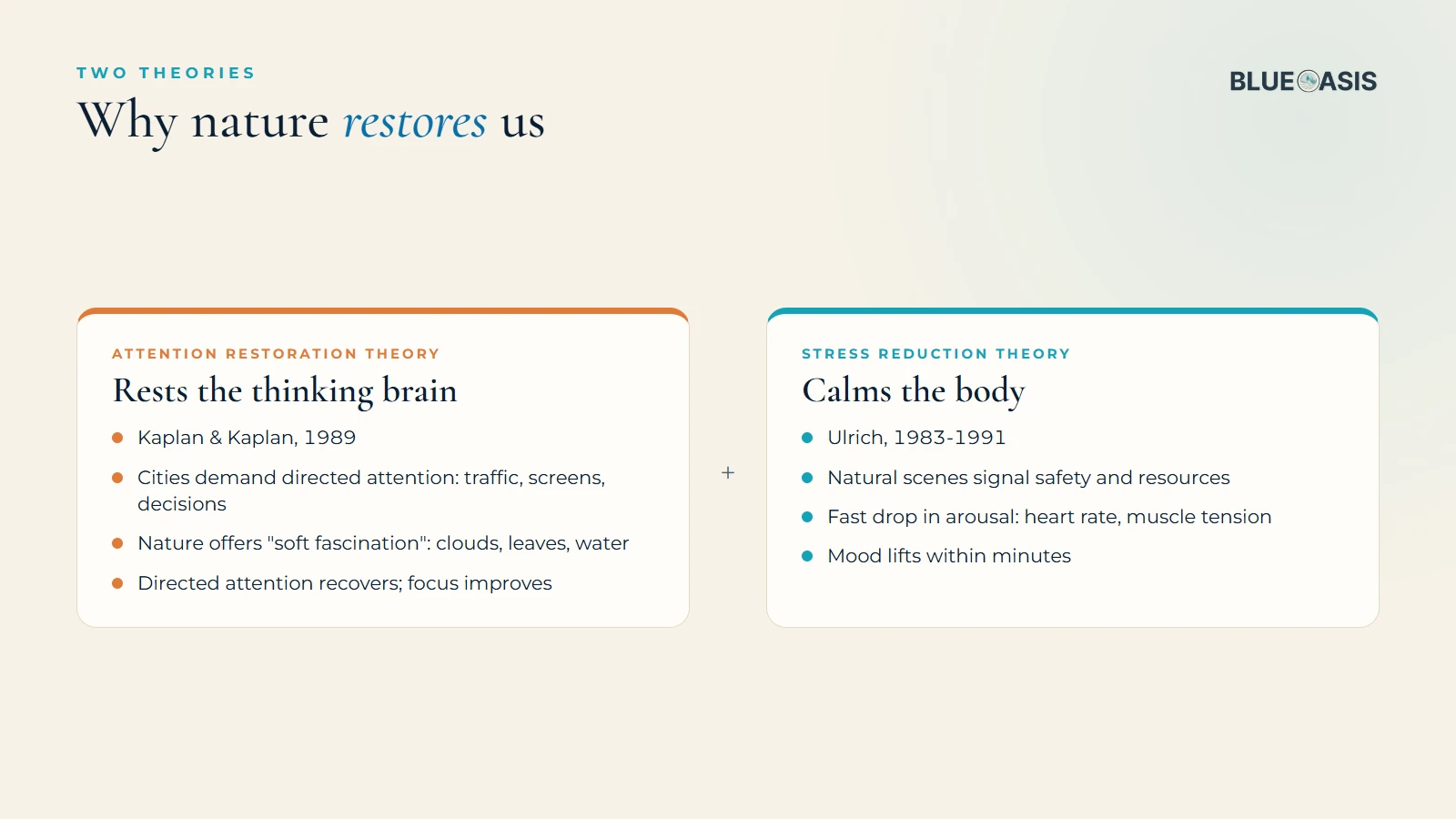
Attention Restoration Theory (Rachel and Stephen Kaplan) says nature's "soft fascination" lets tired directed attention recover. Stress Reduction Theory (Ulrich) says natural scenes signal safety, so arousal drops within minutes.
The dose
A 2019 study of nearly 20,000 adults in England found that those who spent at least 120 minutes a week in nature were significantly more likely to report good health and high wellbeing, whether that came in one visit or several. Another study found the most efficient drop in the stress hormone cortisol came from visits of 20 to 30 minutes.
Blue space and awe
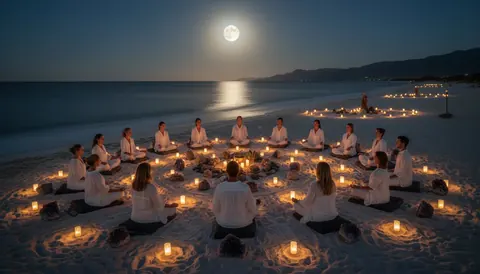
Coasts, lakes and rivers are consistently rated among the most restorative places of all, and moments of awe, a wide horizon or a night sky, shrink the self and its worries to their proper size.
A weekly nature prescription
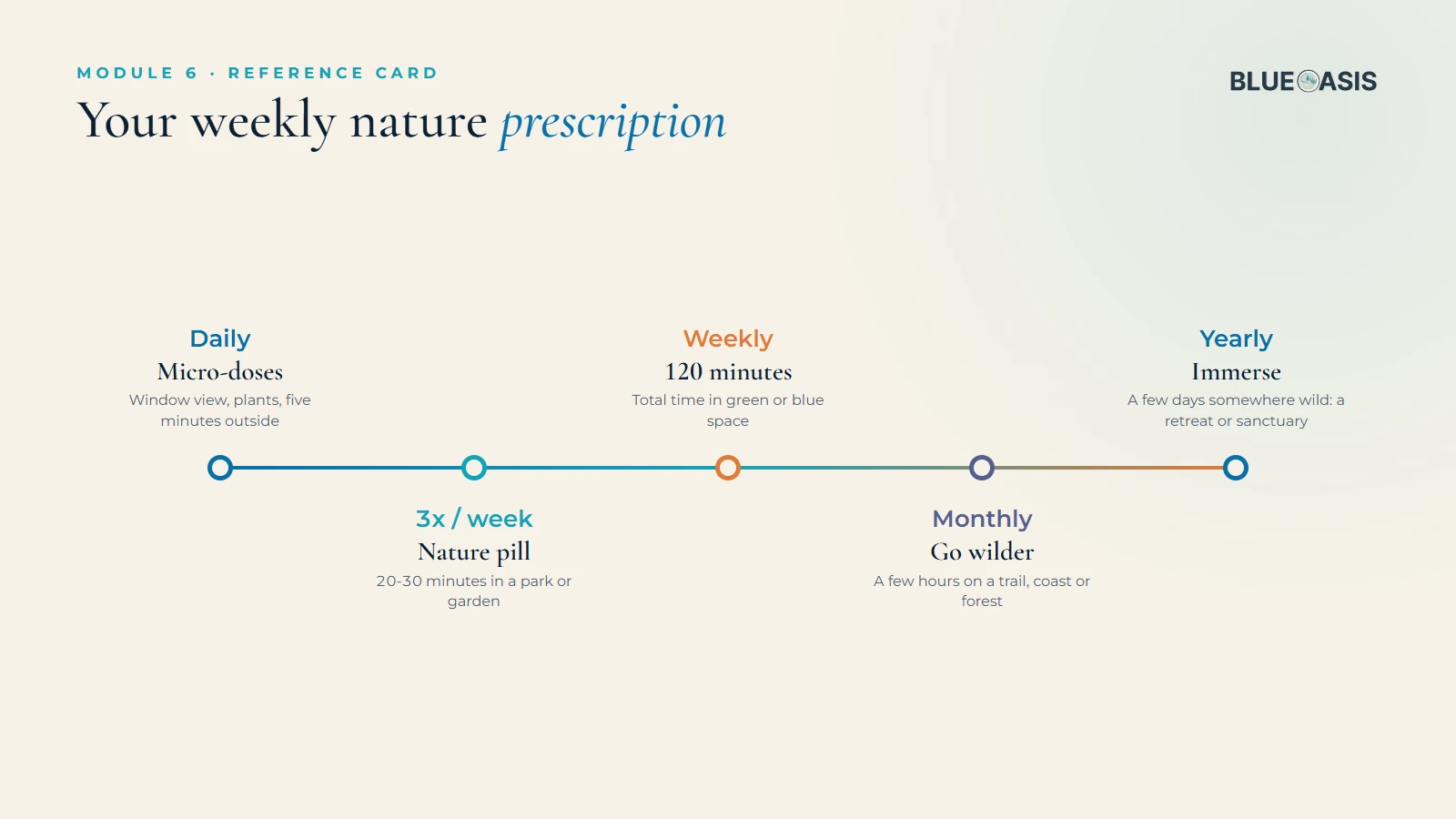
The Online Tribe's Nature as Medicine module includes a nature map, a four-week tracker and a sit-spot journal.
Sources
- Ulrich RS. View through a window may influence recovery from surgery. Science. 1984;224(4647):420-421. Link
- Kaplan S. The restorative benefits of nature: toward an integrative framework. Journal of Environmental Psychology. 1995;15(3):169-182. Link
- White MP, Alcock I, Grellier J, et al. Spending at least 120 minutes a week in nature is associated with good health and wellbeing. Scientific Reports. 2019;9:7730. Link
- Hunter MR, Gillespie BW, Chen SY-P. Urban nature experiences reduce stress in the context of daily life based on salivary biomarkers. Frontiers in Psychology. 2019;10:722. Link

Dayna Hale
The visionary behind Blue Oasis Life, Dayna curates unparalleled holistic experiences for high-performing individuals.



Comments
0 comments