





Leadership is a privilege and a load. Your nervous system carries it whether you notice or not, and the cost often shows up first in sleep, temper and judgement.
What triggers the biggest stress response
A review of 208 laboratory studies found that the largest cortisol responses came from tasks combining social-evaluative threat (being judged) and uncontrollability. Board meetings, investor pitches and crises combine both.
The three faces of burnout
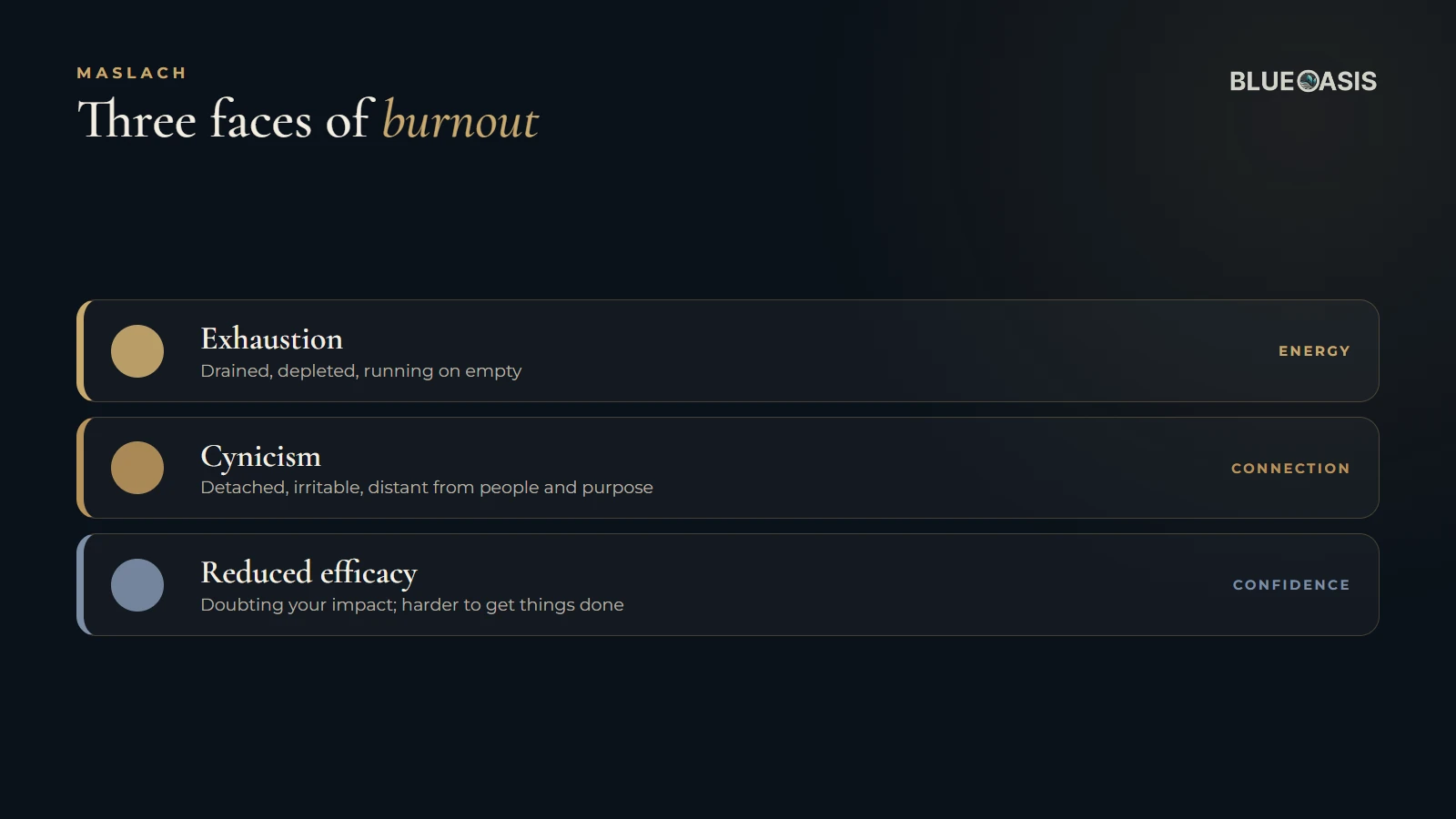
Christina Maslach describes burnout as exhaustion, cynicism and reduced professional efficacy, arising from a mismatch between people and the conditions of their work, not from personal weakness.
Perform without paying for it later
Performance follows an inverted U: some arousal sharpens you, too much narrows attention. In one experiment, people told that a racing heart was helping them perform showed healthier cardiovascular responses and did better. Reappraisal works.
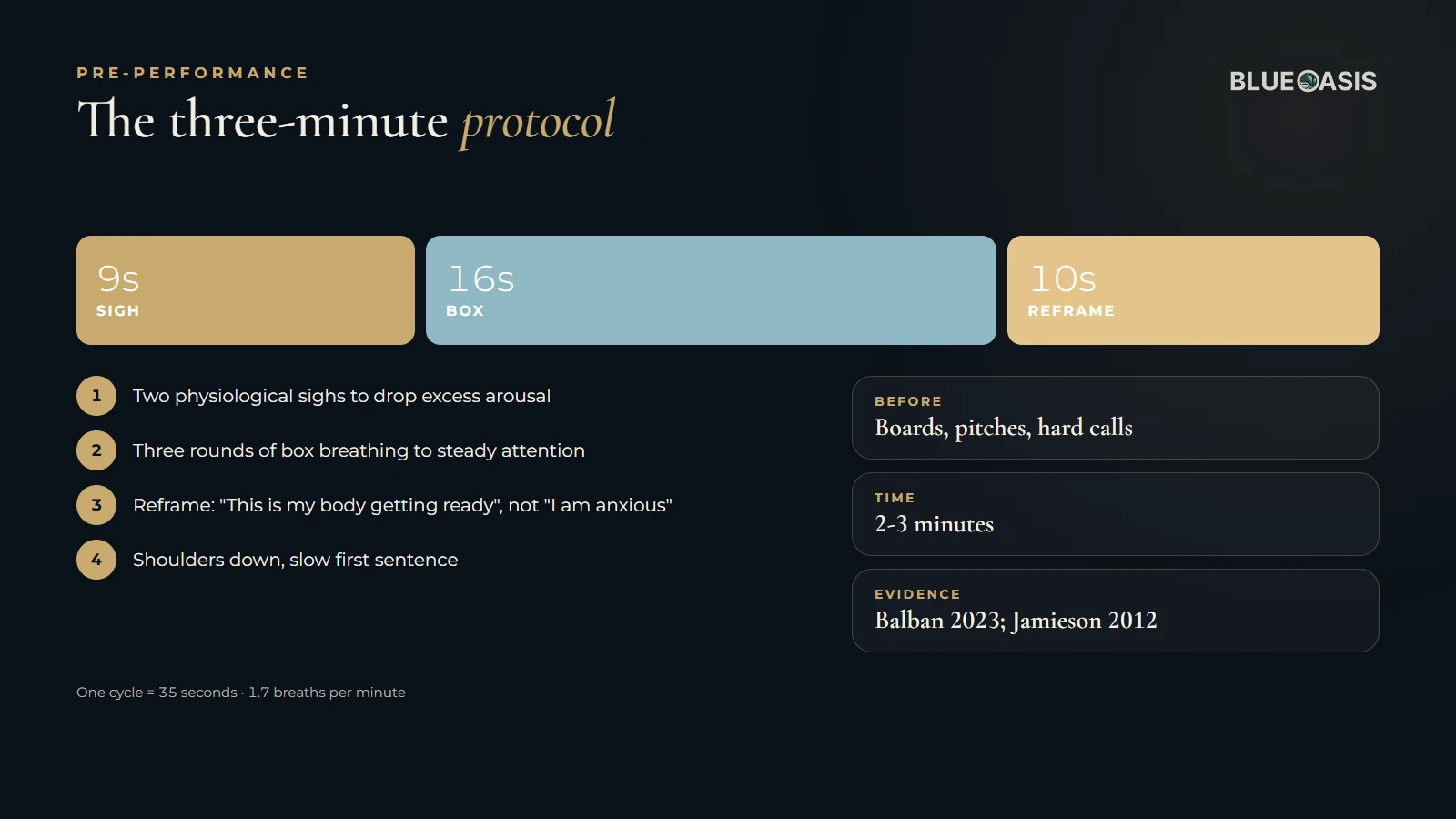
- Two physiological sighs.
- Three rounds of box breathing.
- Reframe: "This is my body getting ready."
- Slow your first sentence.
Recovery is the real skill
The best leaders are not the calmest; they recover the fastest. A 90-second reset between meetings, a protected recovery day each week and a consistent sleep window do more than an occasional holiday.
Our Corporate Wellness programme brings biofeedback, osteopathy and environmental design to teams of 50 to 250, measured over 90 days.
Sources
- Dickerson SS, Kemeny ME. Acute stressors and cortisol responses: a theoretical integration and synthesis of laboratory research. Psychological Bulletin. 2004;130(3):355-391. Link
- Maslach C, Leiter MP. Understanding the burnout experience: recent research and its implications for psychiatry. World Psychiatry. 2016;15(2):103-111. Link
- Yerkes RM, Dodson JD. The relation of strength of stimulus to rapidity of habit-formation. Journal of Comparative Neurology and Psychology. 1908;18(5):459-482. Link
- Jamieson JP, Nock MK, Mendes WB. Mind over matter: reappraising arousal improves cardiovascular and cognitive responses to stress. Journal of Experimental Psychology: General. 2012;141(3):417-422. Link

Dayna Hale
The visionary behind Blue Oasis Life, Dayna curates unparalleled holistic experiences for high-performing individuals.



Comments
0 comments